


In a world where connectivity reigns supreme, connected grid puzzles are the brain-teasers that challenge even the sharpest minds. Picture this: a grid filled with dots and lines, where the only path to victory lies in clever connections. It’s like a game of chess, but with more colors and fewer existential crises.
Overview of Connected Grid Puzzles
Connected grid puzzles involve creating or recognizing connections across a grid layout. These puzzles present intriguing challenges that engage and stimulate cognitive abilities.
Definition and Concept
Connected grid puzzles consist of a grid filled with nodes or cells requiring players to connect points using lines or pathways. Players must navigate rules dictating how connections form while ensuring no overlaps or gaps occur. Problem solvers aim to connect all specified points, creating an unbroken network. Each puzzle varies in complexity, often incorporating colored lines or thematic elements to enhance visual appeal and difficulty. Engaging with these puzzles sharpens logical reasoning and spatial awareness.
Importance in Puzzle Games
Connected grid puzzles hold significant value within the realm of puzzle games. They offer diverse challenges that cater to varying skill levels, attracting casual players and enthusiasts alike. Players enhance critical thinking with each puzzle tackled, as strategic planning and foresight become essential. These puzzles encourage social interaction by fostering competitive play and collaborative problem-solving. Furthermore, their unique design earns them a dedicated following, making them a staple in game collections.
Types of Connected Grid Puzzles
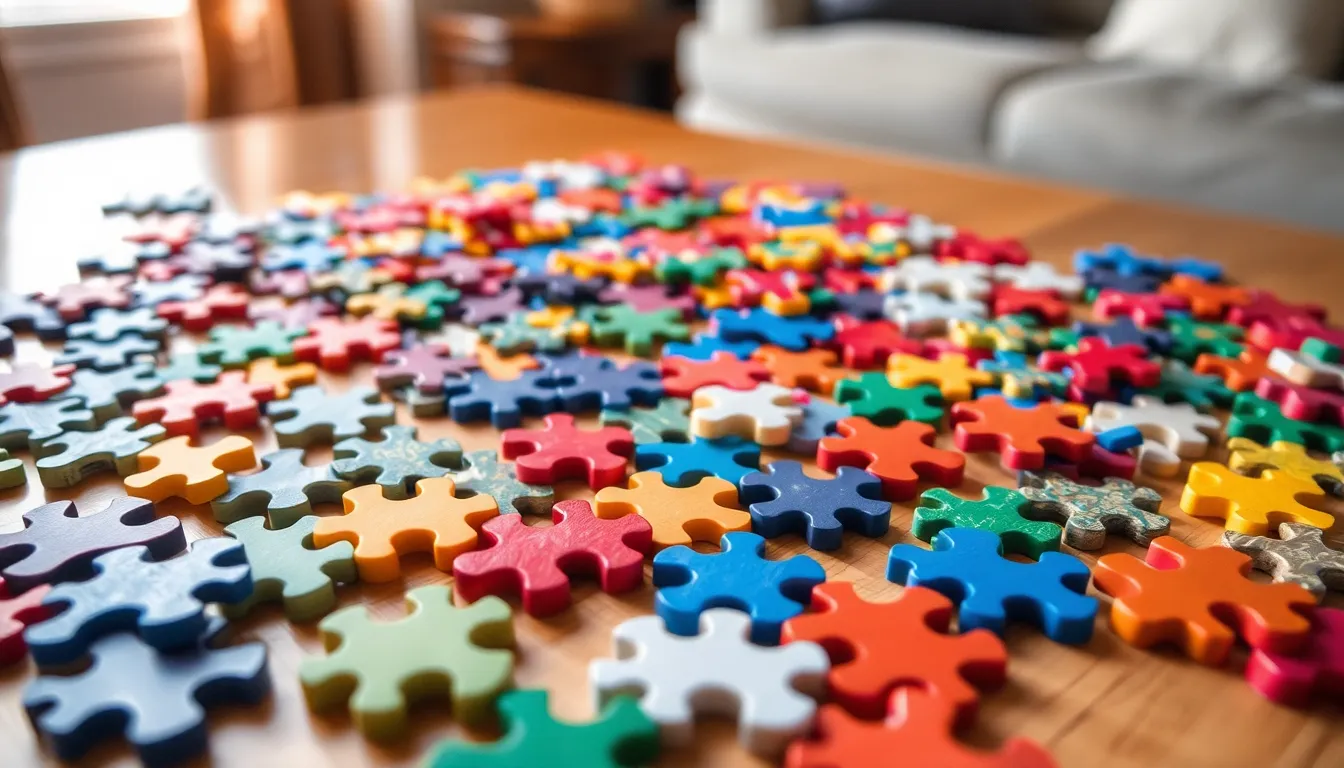
Connected grid puzzles encompass various types, each presenting unique challenges for players.
Classic Grid Puzzles
Classic grid puzzles adhere to traditional formats. Players connect dots or nodes with straight lines, adhering to specific rules that prevent overlaps. Each puzzle typically features a straightforward grid layout, often containing a predictable number of nodes. Visual simplicity enhances engagement, making these puzzles accessible to all skill levels. Variants exist within this category, allowing for flexibility in difficulty. Classic grid puzzles rely heavily on logical reasoning, emphasizing critical thinking and problem-solving skills.
Modern Variations
Modern variations introduce innovative twists to the classic format. Players encounter colorful elements and intricate themes that increase complexity. These puzzles often include curved lines or patterns, enhancing visual appeal and requiring more strategic planning. Developers frequently incorporate technology, enabling digital formats that provide interactive experiences. Features like timers or scoring systems enhance competitiveness. Modern variations attract a broader audience, appealing to both casual and serious gamers. Their evolving designs ensure continued interest in connected grid puzzles.
Strategies for Solving Connected Grid Puzzles
Solving connected grid puzzles requires strategic thinking and logical reasoning. Players can enhance their problem-solving skills by applying targeted methods.
Logical Approaches
Identifying patterns plays a critical role. Players analyze the grid to spot potential connections between nodes. Visualizing multiple solutions aids in considering all possibilities. Prioritizing paths that maximize connections often leads to successful outcomes. Testing different connections without overlap enables exploration of various scenarios. Establishing a systematic method of approaching the grid simplifies the process. Relying on logic consistently ensures players remain on track, making complex puzzles more manageable.
Tips for Beginners
Starting with simpler puzzles builds confidence. Beginners should focus on mastering foundational techniques first. Practicing with classic grid puzzles allows a gradual increase in complexity. Utilizing colored lines can help in visualizing connections more clearly. Taking breaks helps maintain focus and provides fresh perspectives. Setting achievable goals encourages steady progress. Lastly, collaborating with others promotes learning and enhances enjoyment in solving puzzles.
Benefits of Playing Connected Grid Puzzles
Playing connected grid puzzles offers various advantages that contribute to overall well-being and mental acuity. These puzzles stimulate the brain, engage players in a dynamic way, and promote a range of skills.
Cognitive Development
Cognitive development significantly benefits from engaging with connected grid puzzles. They enhance logical reasoning, elevate problem-solving abilities, and encourage strategic thinking. Regular interaction with these puzzles leads to improved memory and pattern recognition. Players analyze grids, visualize connections, and anticipate multiple solutions, cultivating critical thinking skills. Additionally, tackling different levels of complexity strengthens mental flexibility. Players often find that mastering these puzzles translates to better performance in everyday decision-making scenarios.
Stress Relief
Stress relief is another key benefit associated with playing connected grid puzzles. Focusing on the puzzles encourages mindfulness, providing an escape from daily pressures. Engaging in a challenging activity like this promotes relaxation and reduces anxiety levels. Players often experience a sense of accomplishment upon completing puzzles, which boosts overall mood. Connecting with others for collaborative or competitive play also fosters social interaction, contributing to emotional well-being. By dedicating time to these puzzles, individuals can enjoy moments of tranquility while sharpening their cognitive skills.
Connected grid puzzles offer a unique blend of challenge and enjoyment that appeals to a wide range of players. Their engaging nature not only sharpens cognitive skills but also fosters social connections through collaborative play. As players navigate the intricacies of these puzzles they enhance their problem-solving abilities and strategic thinking.
With various types available from classic to modern, there’s something for everyone. Whether tackling simpler formats or diving into more complex variations, the journey through connected grid puzzles is both rewarding and enriching. Embracing these brain-teasers can lead to improved mental acuity and a satisfying way to unwind.


